Table of contents
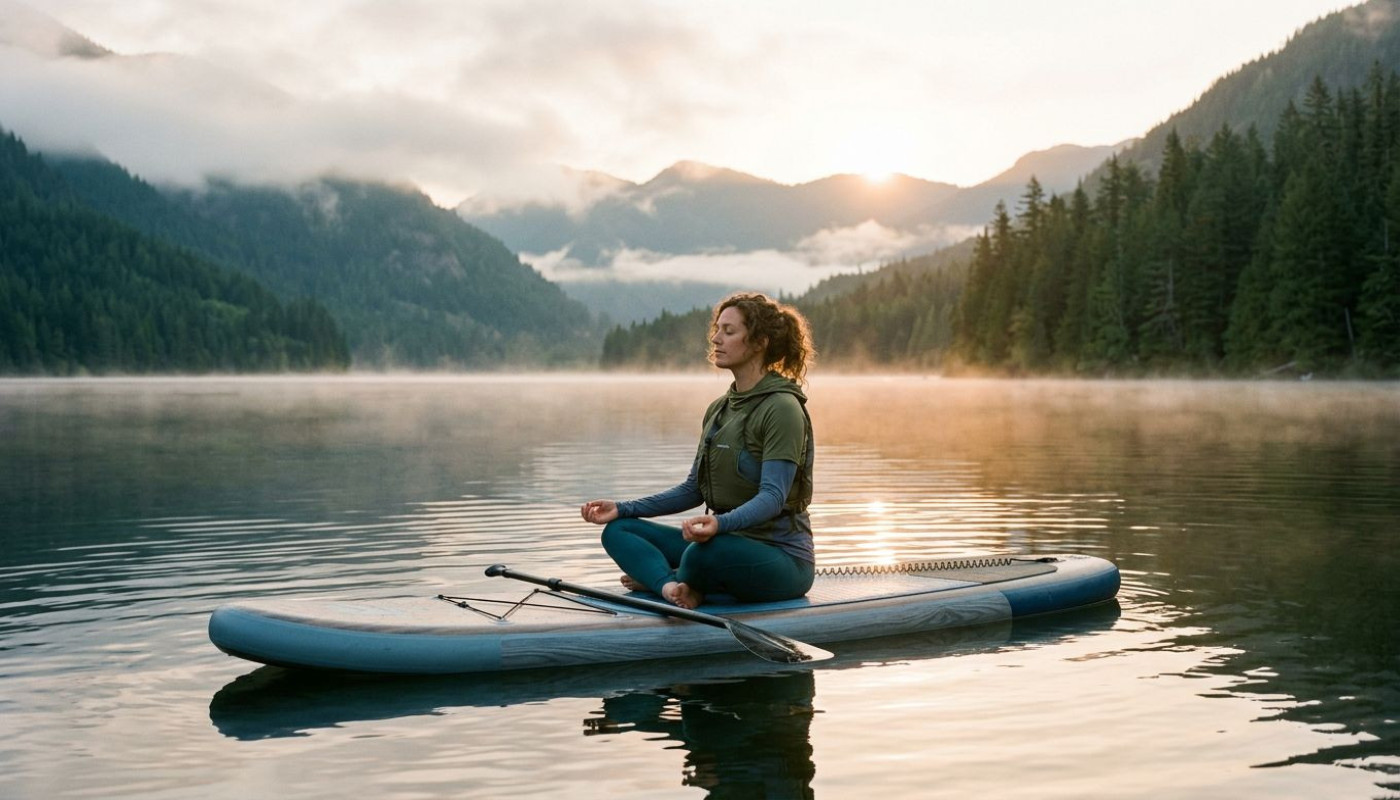
Before the beach crowds arrive and the wind is still undecided, sunrise stand-up paddleboarding has become a quiet ritual in coastal cities from California to the Mediterranean, and it is no longer just about fitness. Researchers have repeatedly linked early-day light exposure to stronger circadian alignment and better sleep, while “blue space” time near water correlates with lower psychological distress, and many paddlers say the first hour of daylight is when attention sharpens and stress loosens its grip.
What the dawn does to your brain
It feels poetic, but the sunrise effect is also measurable. Light is the primary cue for the body’s circadian clock, and timing matters; morning light tends to advance circadian phase, which is associated with earlier sleep onset and improved alertness later in the day. In plain terms, stepping outside at dawn does more than “wake you up”, it helps your brain decide when to be awake, when to wind down, and how to regulate mood across the hours that follow.
Stand-up paddling adds a second lever: gentle, continuous movement that keeps the heart rate in a moderate zone, the kind of effort public-health guidelines repeatedly associate with reduced anxiety and lower risk of depression. Unlike high-intensity training that can leave the nervous system buzzing, a sunrise session often sits in the sweet spot, steady breathing, repetitive strokes, and just enough balance work to demand attention. That balance requirement is not a small detail; motor-control tasks pull focus away from rumination, and many paddlers describe the same shift athletes in other sports call “quiet mind”, the moment when the next stroke becomes the only thing that matters.
The water itself plays a role. A large body of research on “blue spaces”, coastal environments, lakes, and rivers, has found associations between proximity to water and better self-reported mental health, and between time spent near water and lower stress. Causality is complex, and confounders exist, yet the pattern is consistent enough that urban planners now cite blue-space access as a public-health lever. At dawn, when ambient noise is lower and visual clutter fades, those sensory inputs are simplified, and that simplification can be the whole point: fewer decisions, fewer notifications, and a horizon that practically insists on a longer exhale.
Balance turns into attention training
Anyone who has stepped on a board in moving water knows the truth: distraction has consequences. A wandering mind can mean a wobble, a wet phone, or a swim, and that immediate feedback loop is why sunrise paddling can feel like meditation without the pressure of “doing meditation right”. Mindfulness, in the clinical sense, is not mystical; it is sustained attention to present-moment experience, with less judgment and less automatic reactivity. A board on water makes that definition practical, and the best part is that the training happens while you are simply trying to stay upright.
The mechanics encourage it. The stroke is repetitive, but not mindless: the paddle enters, catches, pulls, exits, and resets, and small adjustments in hand position or torso rotation change stability and efficiency. Because the body must coordinate core, hips, and shoulders, the brain keeps checking in with sensation, pressure under the feet, tension in the grip, the sound of the blade, and the micro-shifts of current. That is attention training by design, and it resembles what sports psychologists describe as “task-relevant focus”, a performance skill that can generalize beyond the water, into meetings, commutes, and the kind of daily stress that usually feels larger than it is.
There is also a social angle that surprises people. Sunrise crews are often small and quiet, more nod than chatter, yet that light-touch community can be protective for mental health. Studies in public health consistently link social connection with better well-being, but connection does not always need long conversations; shared routines matter, and so does the feeling of being part of something calm. For those who paddle alone, the ritual still creates a boundary: a clear start to the day, a commitment that is hard to interrupt, and a physical reminder that you can show up for yourself before the world starts asking for things.
The gear question nobody avoids
What can ruin a mindful session fastest? The small annoyances. A leash that tangles, cold hands that go numb, a fin that loosens mid-glide, or a phone that is “water-resistant” right until it isn’t, and suddenly the mind is no longer quiet, it is bargaining with discomfort. Experienced paddlers learn that mindfulness is not only an inner state, it is also an environment you protect, and gear is part of that environment.
At dawn, conditions can shift quickly, and preparation is not overkill. Temperatures are lower, visibility changes by the minute, and boat traffic may be sparse but less predictable; a bright light, reflective details, and a clear plan for self-rescue matter more than they do at midday. Even on calm water, safety basics like a leash and a properly fitted personal flotation device are non-negotiable in many regions, and for good reason: cold shock and fatigue do not care how peaceful the sunrise looks. Add in the practicalities, hydration, a dry bag, a spare layer, and the session is not just more comfortable, it is more likely to stay in that mindful lane you came for.
This is where crossover culture shows up. Many dawn paddlers also kite, wing, or surf, and they borrow the same logic: reliable equipment buys you freedom. If you are building a kit that works across sessions and conditions, it can be useful to look at well-curated selections of kitesurfing accessories, not because you are trying to turn a peaceful paddle into a technical obsession, but because the right leash, bag, protection, or repair item can prevent the kind of minor failure that ends a morning early. The mindful side of dawn sports is often less about adding complexity, and more about removing the friction that steals attention.
How to make it a real habit
Motivation is fragile; routines are stronger. Sunrise sessions sound romantic, but the difference between “once in a while” and “every week” is usually logistics, not willpower. Most regular paddlers pick a launch spot that is boringly convenient, then they reduce morning decisions to almost nothing: board ready, clothes staged, keys and headlamp in the same place, and a clear turnaround time that fits the rest of the day. That structure is not the opposite of mindfulness; it is what makes space for it.
Timing helps, too. Sleep researchers emphasize that consistent wake times support circadian stability, and that late-night light, especially from screens, can delay melatonin onset, which makes dawn starts harder. If sunrise paddling is the goal, the evening before matters: dimmer lights, fewer late emails, and a realistic bedtime. On the water, beginners often benefit from a simple rule, start shorter than you think you should. A 20 to 30-minute glide that ends with energy in the tank is more likely to be repeated than an ambitious slog that leaves you depleted. Mindfulness is easier when you are not negotiating exhaustion.
Finally, decide what “mindful” means for you, in concrete terms. Some paddlers leave headphones at home and focus on stroke counting, others set a single intention, patience, curiosity, or gratitude, and return to it every time the mind drifts. If you bring a phone for safety, consider airplane mode; you can still use location sharing or emergency features if needed, but you will not invite the day’s noise onto the board. The simplest metric is the one you feel: when you step off the water, do you look at your schedule with a little more room inside it?
Planning your next sunrise outing
Book early if you want instruction, and expect prices to vary by region, season, and whether you rent a board or bring your own. Many clubs offer multi-session passes that lower the per-ride cost, and some cities subsidize water-safety or outdoor-sport programs, especially for youth and beginners; ask local associations, they often know what is available. Budget for essentials first: safety gear, warmth, and reliable storage.
Similar articles

